


Whether you are planning to secure a reliable private water supply for your home, farm, or commercial property, understanding the borehole drilling process is an essential first step.
At Aqualine Drilling, we help property owners make informed decisions by providing professional guidance throughout every stage of the drilling process. From the initial site assessment and water exploration to drilling, installation, and testing, knowing what to expect can help you plan effectively and choose the right solutions for your needs.
What Is Borehole Drilling?
Borehole drilling is the process of creating a narrow, deep shaft in the ground to access groundwater held in underground rock formations called aquifers. Once the borehole is drilled, a pump system is installed to draw water to the surface. The result is a private, long-term water source that operates independently of the mains supply.
Understanding the borehole drilling process for groundwater access starts with recognising that every site is different. The depth, geology, and yield of a borehole all vary depending on your location, which is why each project begins with a thorough assessment rather than a one-size-fits-all approach.
Step 1: Site Assessment and Hydrogeological Survey
The first stage of the borehole drilling process is a professional site assessment. A qualified hydrogeologist or borehole specialist will evaluate your land to determine the most suitable location for drilling. This typically involves:
- Reviewing geological and hydrogeological maps of the area
- Assessing ground conditions and any surface features that indicate groundwater presence
- Identifying the likely depth and yield of the target aquifer
- Checking for any environmental or planning considerations that may affect the project
At Aqualine Drilling, we understand that choosing the right drilling location is critical to the success of your borehole. Drilling in an unsuitable location can result in a low-yield or dry borehole, leading to unnecessary costs and delays. A professional hydrogeological assessment helps minimise these risks and provides a reliable foundation for the next stages of your borehole project.
Step 2: Obtaining the Necessary Permissions
Before any drilling begins, certain permissions and registrations may be required depending on your location and the intended use of the water. In many regions, abstracting groundwater above a certain threshold requires a licence from the relevant environmental authority. Your borehole specialist should guide you through this process and ensure all necessary documentation is in place before work starts.
Step 3: Mobilising the Drilling Rig
Once permissions are secured and a suitable location has been identified, the drilling rig and supporting equipment are mobilised to site. Adequate access is required for the machinery, so the site is assessed to ensure equipment can reach the agreed drilling position safely and without causing unnecessary disruption.
Step 4: The Drilling Operation
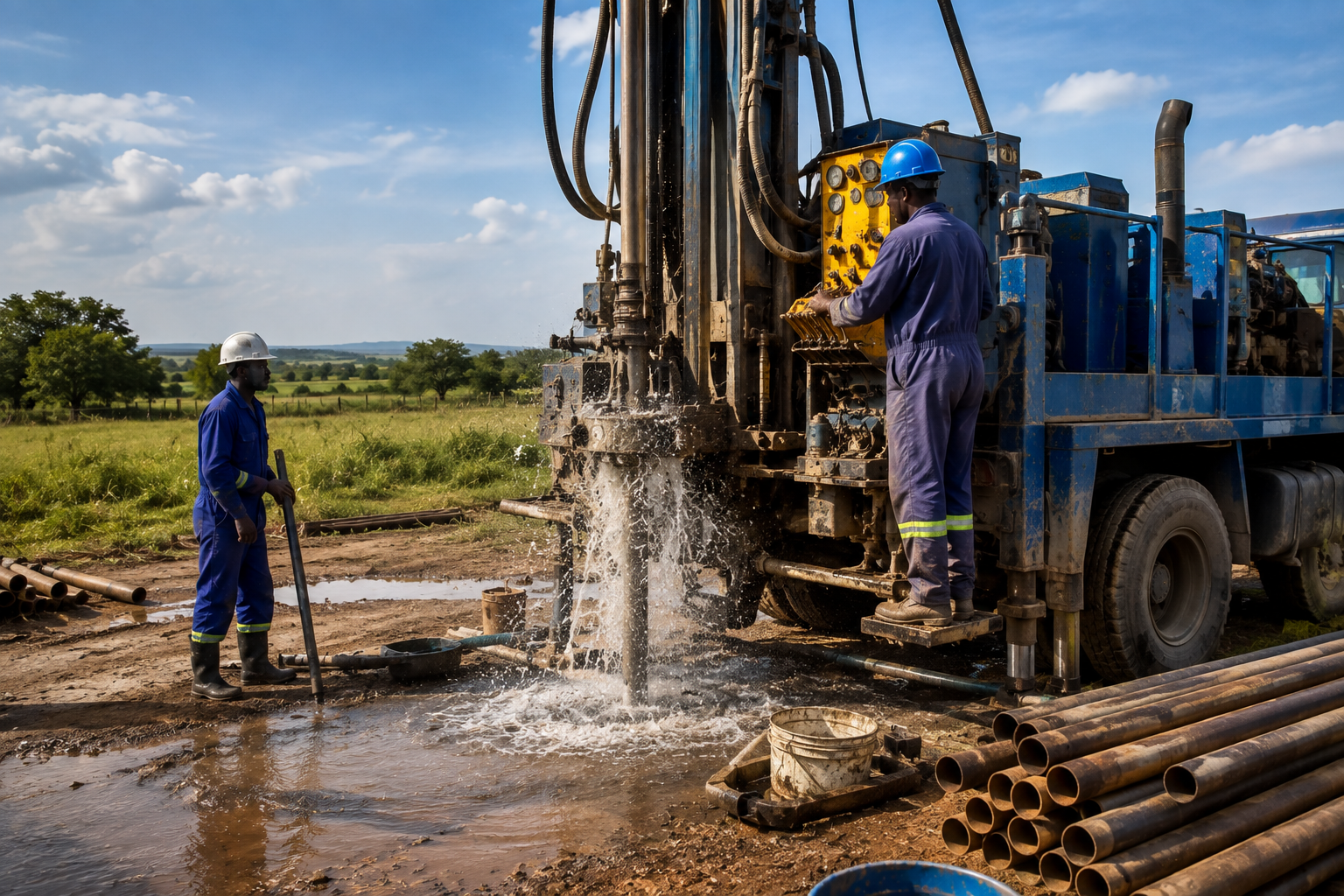
This is the core stage of the borehole drilling process. The method used will depend on the local geology, but the most common approaches include rotary drilling and cable percussion drilling.
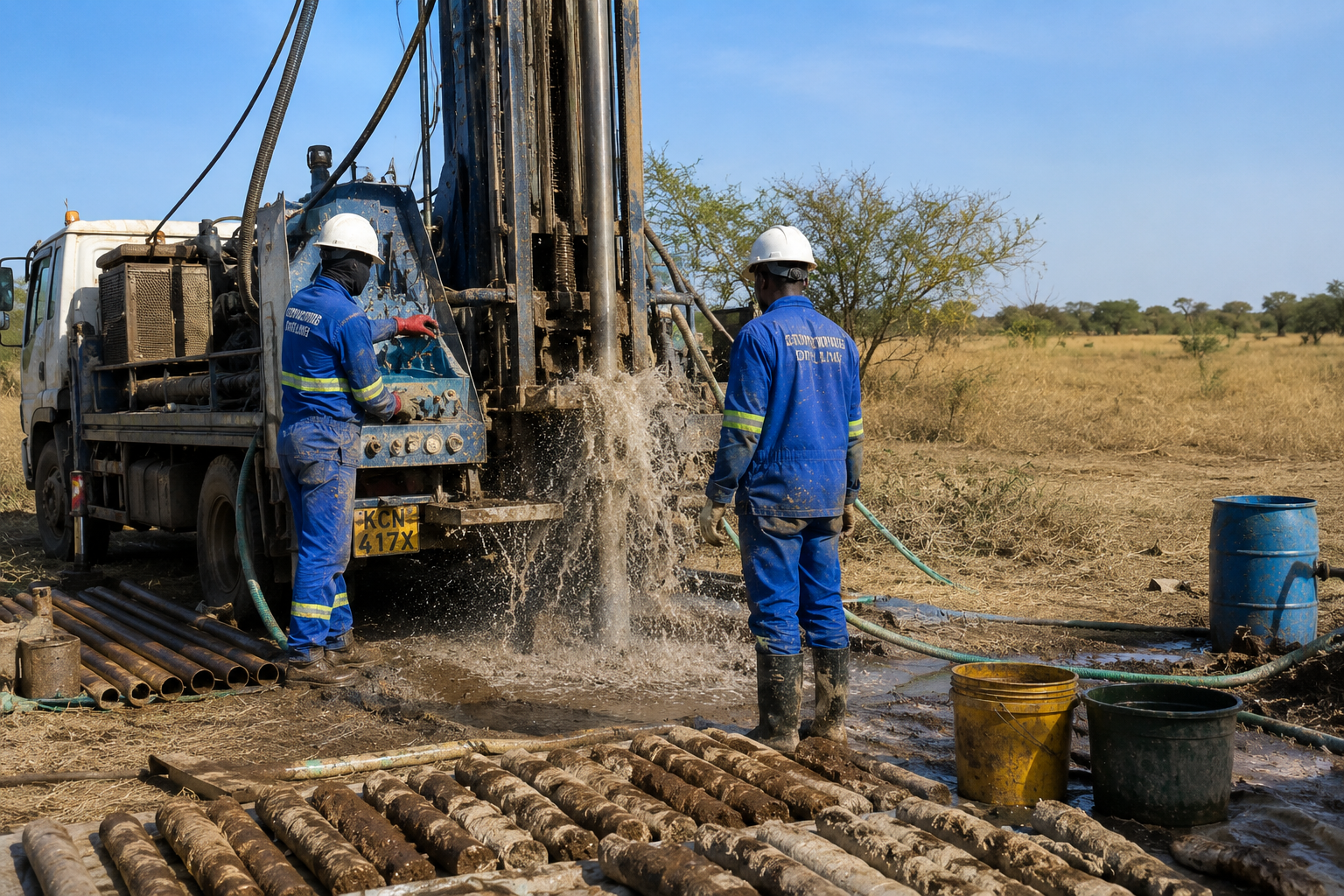
Rotary Drilling: Rotary drilling uses a rotating drill bit to cut through rock and soil. Drilling fluid or air is circulated down the drill string to cool the bit and bring cuttings to the surface. This method is particularly effective in harder rock formations and allows for efficient drilling to significant depths.
Cable Percussion Drilling: Cable percussion drilling, sometimes called shell and auger drilling, uses a heavy cutting tool that is repeatedly raised and dropped to break up softer ground materials. It is commonly used in softer formations such as clay and sand.
Throughout the drilling operation, geological samples known as drill cuttings are collected and logged. This allows the drillers to monitor ground conditions in real time and identify when the target aquifer has been reached.
Step 5: Installing the Borehole Casing and Lining
As the borehole is drilled, steel or PVC casing is installed to support the borehole walls and prevent collapse. In the upper section of the borehole, a solid casing is fitted and grouted into place to prevent surface water or contaminated water from entering the borehole. In the water-bearing zone, a slotted or screened casing is used to allow groundwater to flow into the borehole while keeping sediment out.
Step 6: Development and Testing
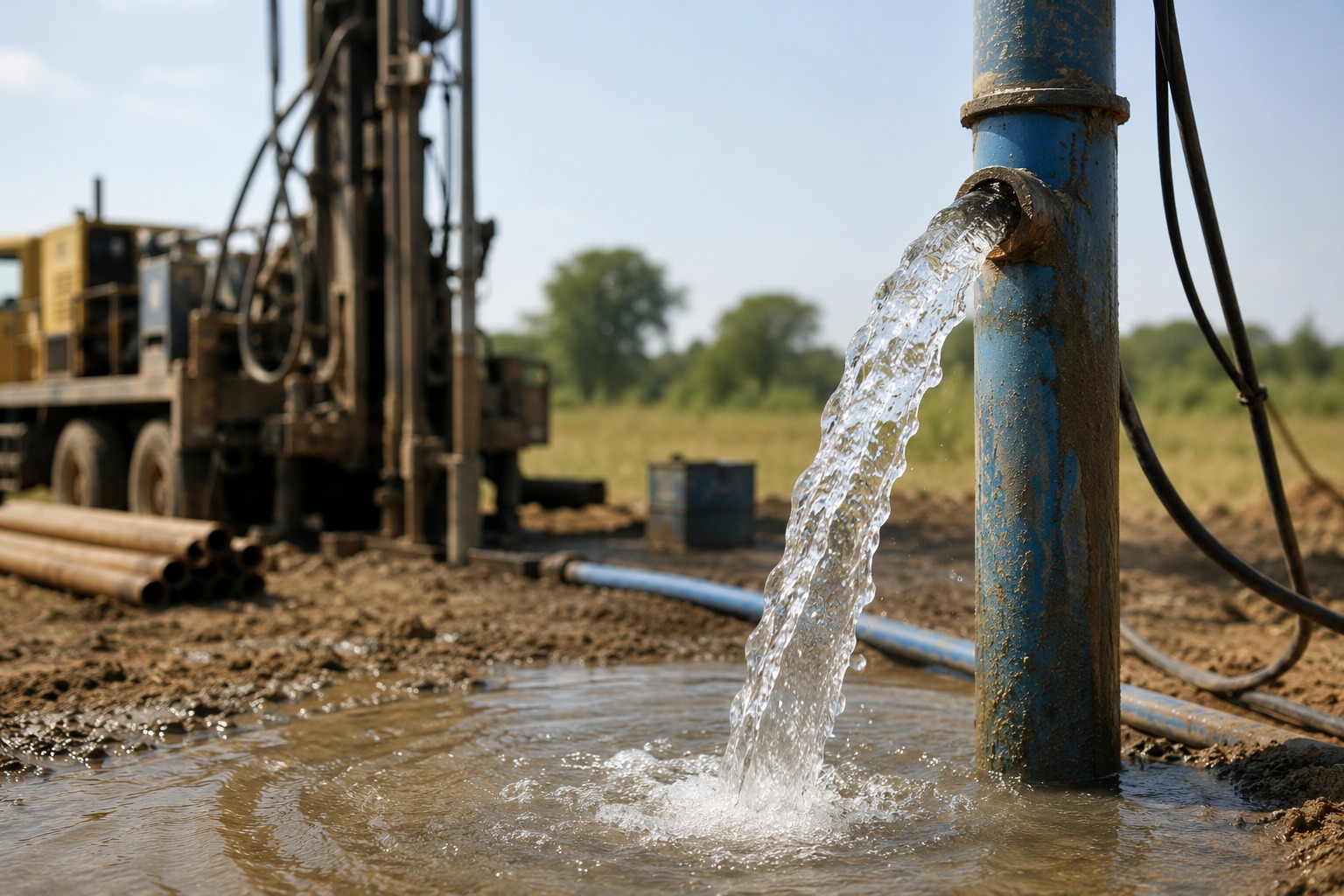
Once drilling and casing are complete, the borehole undergoes a development process. This involves pumping or surging the borehole to remove fine particles and stabilise the surrounding formation. A pump test is then carried out to measure the borehole's yield and sustainable abstraction rate. This data is essential for selecting the right pump and designing an efficient water system.
Step 7: Water Quality Analysis
Understanding how borehole drilling works is not complete without addressing water quality. Before the water is used, samples are taken and sent to an accredited laboratory for analysis. The results determine whether any treatment is required before the water is suitable for its intended use, whether that is drinking water, agricultural irrigation, or industrial processes.
Step 8: Pump and Headworks Installation
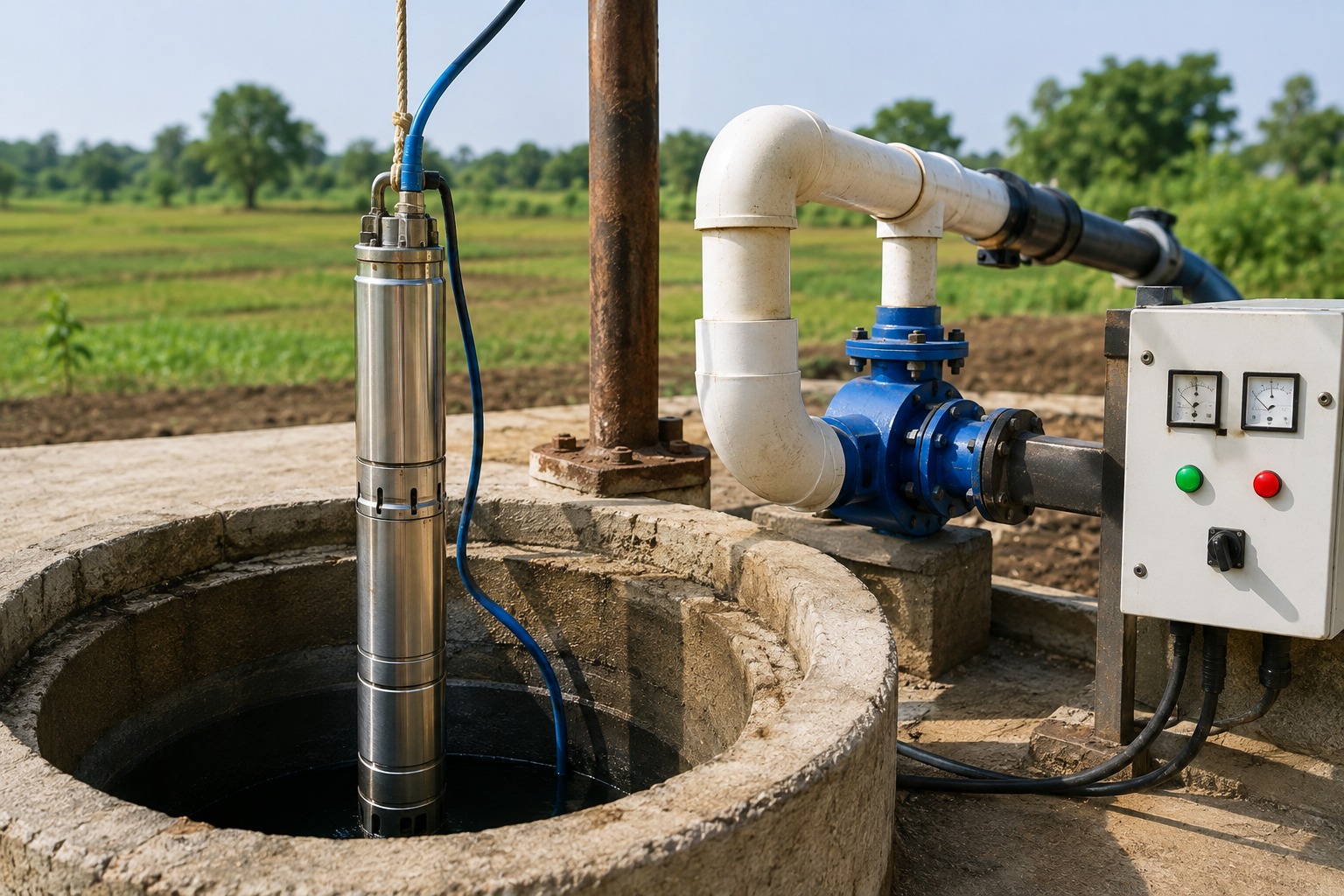
With the borehole tested and water quality confirmed, a submersible pump is selected and installed at the appropriate depth within the borehole. Headworks, which include the above-ground pipework, controls, and protective cover, are then fitted. This completes the infrastructure and connects the borehole to your property's water system.
Aqualine Drilling provides professional pump installation and headworks solutions to ensure your borehole is properly equipped for long-term, dependable water supply.
Summary: The Borehole Drilling Process at a Glance
| Stage | Key Activity |
|---|---|
| 1. Site Assessment | Hydrogeological survey and location selection |
| 2. Permissions | Licence and regulatory approvals secured |
| 3. Mobilisation | Drilling rig and equipment brought to site |
| 4. Drilling | Borehole drilled to target aquifer depth |
| 5. Casing | Borehole lined and sealed |
| 6. Development and Testing | Yield and flow rate measured |
| 7. Water Quality Analysis | Laboratory testing and treatment assessment |
| 8. Pump Installation | Pump and headworks fitted, system commissioned |
Ready to Start Your Borehole Project?
Now that you have a clear understanding of the borehole drilling process for groundwater access, you are in a stronger position to move forward with confidence. Every successful borehole starts with the right expertise and a structured approach, which is exactly what Aqualine Drilling delivers on every project.
Contact us today to arrange a site assessment and take the first step towards a reliable, independent water supply.